The Public Response to Sculpture in the Urban Scene. – Dissertation 2025
Introduction: This dissertation will critically analyse the public responses to various sculptures and sculpture artists who have displayed their sculptures in urban scenes. Art is a very subjective idea because public responses to it can vary so greatly and is often influenced by the individuals interests and lived experiences, the culture and geographical area that the person is from and what age and stage the person is in their life (Art Gallery, no date). Sculptural art is a three-dimensional object which is created through carving, modelling, casting, or constructing (Tate, no date a). The key artists in this field are Thomas Hirschhorn, Joseph Beuys and Kara Walker. However, it is important that more niche and less renowned artists and community events such as Alife Bradley and Pigs Gone Wild are not forgotten. Hirschhorn is an artist that focuses on large scale sculptures that brings community to one place where they can spend time to socialise with each other or learn a new skill such as art or woodwork or spend time doing homework whilst inside the sculpture. Bradley is a sculpture artist that creates large scale sculptures that tour around different places. They come with instructions to do a segment of teaching in local schools that teaches children and young adults about knife crime and knife safety including a knife amnesty box for people to surrender any blades that could be used as weapons. These sculptures have had a more positive response from the public and have been useful in promoting community cohesion, safety and wellbeing. However, this is not always the case. The publics response can also be disrespectful such as vandalising sculptures or the value of the sculpture can be completely missed and undervalued by the public, whether this is intentional or not. I chose this field of Fine Art to analyse and explore because of the quote by Oscar Wilde where he said, “Art is Primarily a purely decorative thing”. Whilst I understand where he comes from when he says this, I do not believe it is entirely true as I feel art is made to evoke the viewer into feeling something or doing something. Thus, should be used to do more than just look pretty. In some ways, I feel the aesthetic of the artwork does not even have to be pretty as some of the most mentally inducing artworks are not made to look aesthetic and such is not suitable to be decorative in most situations. Sculpture is a prominent form of art in public spaces which is often used to serve a purpose such as education, community cohesion or to promote wellbeing. Chapter one discusses the polar opposite ends of the scale of how sculptures can be received in outside environments. For example, how Jorje Pardo’s sculptures are treated (being vandalised and taken advantage of) due to being permanently in the outside environment without any supervision verses how Hirschhorn’s sculptures are treated (being used as an outlet for creativity). The difference between the sculptures is that Hirschhorn’s sculpture is monitored by staff from the local area and temporary. It is interesting how the level of surveillance changes people’s willingness to engage in anti-social and risk-taking behaviour. Chapter two explores how public responses to sculptures can encourage thought and reflection on the meaning and teachings of the message behind the object. For example, Walker’s sculpture A Subtlety evoked conversation and thoughts about historic slavery and the differences throughout history and the present time. The public reactions to the start of Joseph Beuy’s sculpture 7000 Oaks where he piled 7000 stones on the grass in front of the museum Fridericanianum and the stages of them dissipating as the trees got planted prompted conversation and reflection about climate change and our environment which in turn educated people and encouraged them to adjust their life styles. Chapter three analyses the positive impact of sculptures promoting community cohesion, whether this is an effective approach to achieve this and what the overall benefits are. Bradley’s sculpture, Knife Angel, has toured around the United Kingdom, promoting discussion and encouraging the local schools to teach children and young adults about the risks of knife crime, safety and how to apply first aid to stab wounds. The art trail Pigs Gone Wild will also be explored in respect of how it struck up conversations between strangers who otherwise would not talk to each other amplifying community cohesion. The public’s response to sculptures in urban scenes varies greatly although overall, the responses are positive and have constructive and encouraging influences on communities, norms and values and people’s interest and understanding of art and the messages within it.
Chapter One: How people react to sculpture in an outside environment. This chapter will explore Pardo and Hirschhorn’s sculptures in outside community environments and the numerous ways in which they have been received by different groups of people in the community. The way in which different members of the community respond to sculpture in an outside, natural environment differs greatly and also often differs from the artist’s intentions which some may view as a failure. Failure as an artist does not mean that the artwork is wrong or broken but sometimes means it is more expressive and easier to freely interpret so is not always received as is intended. Pardo’s pier sculpture is a made of wooden planks which stretches further than forty metres (Raupach, 2017). It is a sculpture that people can walk on and enjoy a seat whilst taking in the scenery and environment around them. The pavilion area on the pier initially had a cigarette vending machine to allow people to smoke as a way of relaxing at the end of the pier (Sculpture Project Archive, no date). This sculpture received differing reactions from those in the community, some involved vandalism and some involved tranquillity. Rindfuss (2022) documents, following his interview with Pardo, that teenagers in the community would “get high” on the pier and it is noted from images of the pavilion, it was vandalised by people spray painting it. This suggests that some people who visited the pier, most likely the local community, valued the pier differently as a social space to test boundaries. NRW Tourism (no date) describes the pier as somewhere to “relax, pause and look at the glittering lake” with a picnic. This implies that visitors to the area respected it at its face value as a calm place to rest and admire the scenery. Relyea (2016) spoke with Pardo about the contradictions that he had reflected on about the sculpture. A lake gives the impression of openness and panoramic views but the walls of the pavilion act as barriers to this due to the layout of the pier. There is a strong view that cigarettes are harmful to people’s health but the idea of smoking on the pier is to support wellbeing and relaxation. There are many varying perspectives of how this sculpture is understood and interpreted by people in the local community and tourists in the area with different demographics of people valuing it in diverse ways. However, there are also some similarities in individual’s perspectives such as that they all recognise the pier and pavilion as a place to socialise and ‘hang out’.
It is noted that there were similarities in the public’s responses to Richard Serra’s artwork too. The East-West/West-East sculpture by Serra is made up of four steel structures that span over a kilometre to guarantee perfect alignment with the aim to enhance the vast desolate space (Sitz, 2015). However, once the sculptures were unveiled, the public began defacing it with their names, messages and graffiti on them. While some members of the public thought this was appropriate, authorities posted on social media stating “cleaning the artworks in Zakreet so everyone in our community can enjoy. These are works of art, not walls of graffiti. Preserving it from vandalism is our shared responsibility” (Doha News Team, 2020). The polar opposite responses to these artworks in the outside environment are similar in that some people valued them as additions to the environment and some felt that because they are in the open community, the community have the right to personalise and put ‘their stamp’ on them using graffiti. When sculptures are in an outside environment, people appear to take the view that there are less rules and less surveillance so they can engage in more behaviours (Ryan, 2013). The sculpture being outside means that it does not have ‘opening hours’ and it is not staffed. Therefore, people’s reactions to the sculpture differs greatly depending on their personality and whether they are people who choose to take risks, such as using drugs, when given the opportunity to do so (Kahn and Graham, 2019). In contrast, Hirschhorn discusses that artwork is in a precarious position whether it is in a museum, gallery or in the community and that “it’s humans who decide and determine how long the work lasts” (Gingeras, 2016). Hirschhorn compares the perceived risks to sculptures in the community to Egyptian pyramids that have been there for countless number of years without the structure being vandalised
Additionally, the sculpture being outside and being used as a pier leads to an interface between it being architecture and art. Given the nature of architecture being a physical building or object, these are typically outdoors. Art and architecture in terms of career and on face value are vastly different concepts. Art is described as “a process of creating things of extrinsic value through emotional or aesthetic appeal” and architecture is described as a process of “planning, designing, and construction” (Hnin, 2022). This overlap of ideas and approach can lead to people’s reactions to sculptures that have entailed architecture to differ depending on which they place a higher value on which may be down to their individual interests or education. Architecture is recognised as having a purpose or function whereas art is recognised as something to be admired but they are also intertwined in that sculptures entail both skills of an artist and skills of an architect (Parker, 2021). However, some would take the view that art is not as well respected as architecture as art does not have a specific purpose such as to provide shelter or seating and art is more open to interpretation and does not necessarily serve a function (Balarine, 2024). This is encapsulated by Serra stating that “Art is purposely useless, hence why it’s more free than buildings” (Balarine, 2024). In modern urban living, sculpture is seen as escapism and respite from member of the public’s busy lifestyles. For example, a sculpture being something that people can see and then walk round it to observe and think about it. Urban living can often leave little space for de-stressing and art sculptures are an effective way to distract the mind off of their issues at hand (Ijeoma, 2024). When sculptures are placed in the outside environment, the public will come across them in their own time without needing to go into an art gallery which removes a barrier to them being accessed (Department for Digital, Culture, Media and Sport, 2019). Sculptures in outside environments become integrated into the urban community and members of the public therefore interact with them. Urban sculpture is thought to be the most likely form of art to receive widespread support from the public (Wang, 2022). Some public art sculptures have lost their ‘aesthetic’ and can be viewed as ‘polluting’ the urban environment due to the number of art forms that can be seen in an urban environment such as shop windows and other decoration in the community. This leads to sculptures becoming less appealing, especially if they have been there for a long while which is often the case due to the large nature of them. The way in which members of the public responds to sculptures appears to be influenced by their individual characteristics (poverty and risk-taking attitudes versus respect for the environment) and the risk factors associated with the sculptures being in an exposed environment outside. This leads to the public’s reactions varying greatly, sometimes at complete polar opposites. For example, there has been some public protest and anti-social behaviour and some groups of people who have had fun and created positive memories. The public protest reactions to sculptures can become quite extreme when a community is passionate about a topic such as the Edward Colston statue being pulled down, graffitied and then unceremoniously thrown into the river because people were frustrated that a sculpture of someone who was a slave trader was being displayed and celebrated in their city (Harcombe and Bouverie, 2024).
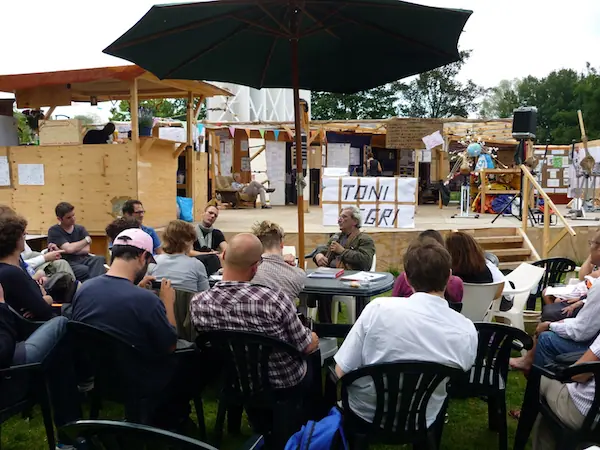
Hirschhorn established the Bijlmer Spinoza festival which was put on following a tragedy affecting the community where a plane crashed killing forty-three people. This festival was comprised of building an outdoor installation in the southeastern district of Amsterdam, known for its high volume of immigrant population and poverty (Hirschhorn 2009). Spinoza was a philosopher who celebrated the concept of life, explored ethics in life and the festival was a way of celebrating his work. This links to the idea of people’s responses to art varying so greatly due to the differences in people’s ethics, values and morals. Hirschhorn’s sculpture monuments are built in areas of poverty and deprivation to teach skills to those who may not have been given the opportunities other people have had on offer. The way that Hirschhorn creates these sculptures is that he finds a location and has a proposed plan that he then communicates to the community with the promise of financial benefit and delegates job roles to people who then use their skills and the skills of others in their group to get the job done. This way, the skills some people might not have, others can teach to them by sharing knowledge and power building a stronger and closer community. Each of the spaces are used for different reasons; for example, some of them are used for different classes or lessons for the community that are run by the community, and some are used as a library, a refreshment bar and a Wi-Fi area to help people connect to with each other (Bishop, 2011). This results in community spirit and community cohesion, although this was not Hischhorn’s intention. Hirschhorn (2009) is of the view that his sculpture projects are about “presence and production” rather than his intention being about contributing to the community. In the Bijlmer Spinoza festival, they did the same thing, every day, regardless of the number of people there and the weather. This is an example of his values of constant presence and production being the motivating factor for his works. Hirschhorn’s sculpture represents and offers different things for different people as his sculpture for him is purely his sculpture; however, when he gets the community to help him make his sculpture it makes it feel like a community project to those who are helping as he is using their best interest in doing something that they would not naturally do. Hirschhorn has created this idea of having hidden polar opposite views on the sculptures ownership as he knows that the humans care more about their own things. This is referenced in Jeremy A Blumenthal’s 2010 review where he writes that ownership involves a sense of exclusive control over what is, perceived to be, owned. This influences structures social situations, and defines social relationships in terms of who does, and who does not, have the right to use, change, give away, exploit, or sell the things that are owned. This idea that if Hirschhorn allows the audience to think they own the sculpture in some respect, the result will be more successful. The reaction of the public viewing the sculpture then changes to being something that they are directly proud of whilst having a sense of self-pride in this sculpture. Whereas if Hirschhorn did not do this, the audience most probably would look over the pride of creating the work and would then see it as just an artwork taking over their community space.
When it comes to the locals of Hirschhorn’s monuments, they are all invited into the monument to experience it in their own ways. This is because everyone has unique needs for escapism, some like to go to the monument to relax whilst some go to do homework or learn a new skill, and some go to rebel from society by learning to spray-paint in a safe area. This is similar to Pier by Pardo in the ways that people all have different reasons for living and enjoy different things in life. This is apparent when Kant (2009) discusses how people define beauty and that people are individual and unique, meaning that there is no rule for establishing what is and what is not beautiful and how people experience what they experience. Hirschhorn believes that “the process of making remains visible and becomes a metaphor for the individual and collective struggle to establish democracy. Implicated in Hirschhorn’s work, viewers are obliged to consume and reflect upon that” (Friedman, no date). However, that is not to say that this is the case every time as he is creating a new form of monument to represent what he wants to say, and the people do not know what it is and what they are meant to read from it (Art 21, 2014). Hirschhorn’s sculptures are described as chaotic and overwhelming (South London Gallery, 2014) and for this reason a lot of the public struggle to form their own ideas of the work he creates. This idea that the audience has not understood his artwork suggests he has failed as an artist, but failure is normal and happens all the time in the outside world. Joel Fisher writes about the New Testament parable of planting seeds: “The seeds (by implication either us, or the word of god) are destined for failure if, instead of landing on fertile ground, they fall either in the path, on rocky ground, or among the thorns. There are dangers in each of these places. The seeds might be eaten by birds, trampled underfoot, choked by brambles, or succumb to drought, there are many ways to fail, it seems, but success is singular” (Le Feuvre, 2010, pp. 116-117). By this reasoning, when the public show interest and interact with his sculptures, they are set up to fail. However, Hirschhorn has created so many things within his sculpture that will help the community, even if they do not understand the main concept within the work, they will take something away from the sculpture, if just that they had fun or had a nice chat. Being happy with this conclusion of the sculpture is defying Fisher’s statement of success being singular, similarly to the quote, “Be happy with what you have and are, be generous with both, and you won’t have to hunt for happiness” (Gladstone, no date). Meaning that if the artist does not set any expectations for the work, the response from the public in relation to the work will become the correct response whether it is the original concept for the work or not. Again, allowing the public to become the author of the artwork in their own minds. Both Pardo and Hirschhorn’s artworks are associated with “relational aesthetics” which relates to the idea that all sculptures in urban environments are made to be seen by the community but that the artworks by these artists are more about them being used by the community which influences the audience more and provokes a more individual and engaging response. This has explored the differences in the artist’s intentions of how they wish for their work to be received and how the public have received the message and artwork in practice. It could be viewed that the artists ability or willingness to communicate their intentions of their sculptures is lacking or that the artist wishes for the viewers to be free in their perceptions and that there are no right or wrongs. This would suggest that trying to understand the publics reactions to sculptures in the outside environment is almost impossible due to the individuality of human beings and thought processes.
Chapter Two: How sculptures communicate context and promote inquisitiveness. This chapter will discuss artworks completed by Walker and Beuys which were made to tell a story and encourage a response from the public to raise awareness and education about a particular issue and the ways in which artists encouraged interactions from the audience to ensure that the context is communicated to them will be explored. The communication between artist and audience is just as important as the artwork itself. Often the audience can find themselves asking themselves questions and considering the context of the artworks to understand them better. This leads to the audience creating a relationship with the art. The artist Walker created her sculpture, A Subtlety, with the message that unpaid and overworked artisans who refined sugar at the Domino Sugar Refining Plant are forgotten about in this day and age (Creative Time, 2014). The sculpture is 35.5 feet tall, 26 feet wide and 75.5 feet long. It is a naked sphinx/woman who is crouched on all fours which is made of polystyrene covered in sugar (Irish, 2014). The context of the history, location and material are key in communicating with the audience. Walker is a Black woman who is known for addressing issues of race, gender, sexuality and violence in her art works (Kara Walker Studio, no date). Sirlin (2014) discusses that A Subtlety was created with the intention to bring awareness and education around the subject of the sugar industry being a slave trade in the 19th century which often resulted in the workers sustaining serious injuries due to the dangers of the equipment and Western markets profiting. The history of the message is communicated to the public by the sculpture having facial features of a Black African person, with her nose and cheekbones being similar to Walker’s and having large lips (Longreads, 2018). The materials used in the sculpture are polystyrene for the shape of the structure and then it was coated with 80,000 pounds of white sugar. Through members of the public’s inquisitiveness and reflection, it was felt by some people that the purity and bright connotations of the colour white was in contrast to the disturbing and violent history surrounding the artwork and slavery of sugar production (Fiala, 2014). The sculpture was surrounded by a number of boys holding baskets with candy in them or bananas, they were made of resin and candy and were designed to gradually melt during the exhibition. This was thought to be similar to ‘white Southern hospitality’ in past centuries where Black children would be used to carry baskets of food etc (Loichot, 2014). The material (corn syrup, sugar and water) that was used to create the boys was purposely chosen with the plan that they would melt to signify that the offering of food turned into an offering of human flesh as a reference to the suffering of the slaves (Raiford and Hayes, 2014). This offered an incredibly powerful message, but only to the audience who visited the exhibition after the point that sculptures began melting. The location of the sculpture was a retired sugar factory which still had the sticky and pungent aroma due to the years of sugar production that happened there.
Following the exhibition running for three months, the factory was demolished to make way for housing developments (Art21, 2021). Admission to the installation was free, there were over a hundred thousand people visit the artwork and visitors were encouraged to post responses to the sculpture on social media with a specific hashtag which had 21.1 thousand posts on Instagram (Longreads, 2018). It is worth noting that there were no flyers, captions or explanations and only a few volunteers to answer questions, the audience were mostly left to come to their own conclusions. This further promoted curiosity and individual reflection and thought about the artwork and the meaning or message behind it. This artwork resulted in controversy from the public, some felt that the sculpture whitewashed slavery and did not offer enough context whilst some people felt that it delivered a powerful and respected message. The communication was received as intended by some viewers, from viewing the Instagram hashtag posts there was a trend of the people who understood the message being of Black heritage implying that they likely already had an awareness of the history and context. The images of people who are ridiculing the sculpture tend to be of non-Black heritage. This may be because of people that are of non-Black heritage are not understanding the gravity of the message and cannot relate to the history. However, for those who did not create judgement based on their first impressions of the ‘over sexualised’ sculpture, it offered a learning opportunity. For some members of the public, the exhibition acted as a powerful educational experience to learn about Black heritage and culture which will have influenced their understanding of Black history and issues of racism in everyday life.
If the audience do not meaningfully participate in the whole process of the sculpture, including visiting the exhibition, interacting on social media and doing some further reading, they are unlikely to understand the intended message of the sculpture’s context. This relates to Beuys theory of social sculpture that everything is sculpture and that sculpture is not just what is in front of the viewer, it is everything that comes from what is in front of the viewer, allowing life to become part of the sculpture (Something Curated, 2019).There were also some people who found the artwork to be comical and shared this on social media by taking pictures of themselves with their hands ‘on’ her breasts. From the response of the artwork some people believe that the sculpture did not do the context justice saying that the meaning was lost and over sexualised being the opposite of what the sculpture was built for. It was felt to be offensive, due to the sphinx being a hybrid of two racist stereotypes (domestic family worker and a sexual object) of Black working classed women (Creative Time, 2014). Leading the audience to be inquisitive towards the subject over the context of the sculpture. By some people ‘taking the mick’ of the sculpture, the seriousness and significance of the artists message is lost. The relationship between artist and audience and within the audience is promoted by there being numerous opportunities to interact with the sculpture, with each other and with the learning. The audience’s responses to the artwork entail curiosity, reflection and inquisitiveness which is further encouraged by the artist urging people to come to their own conclusions, due to the lack of information at the exhibition, but also to interact with each other to build on their thoughts and interpretations. A Subtlety was created in a dis-used factory which is an urban environment that would not typically be used to display artworks and following the exhibition, the environment became even more urban by the housing development. The audience’s response to the artwork was informed by the location of the exhibition and the context and history surrounding this as well as the additional activities of interacting on social media and doing their own learning around the topic. If the sculpture were to be in a different location or without some of the communication methods being used, it is likely that the full message and significance would not have been communicated effectively to members of the public.
Beuys is an artist that commonly works with highly conceptual ideas such as giving back the land that was once consumed by nature. His sculpture 7000 Oaks (Art UK, 2025) started in 1982, and is comprised of 7000 stones that were piled up on the grass in front of the Museum Fridericianum with the idea that the pile would shrink every time a tree was planted (Tate, no date b). Kassel is an urban city in central Germany which is renowned for the art works that have been created and displayed there (German National Tourist Board, no date). This suggests that sculptures and artworks that are in Kassel are likely to be recognised and explored by those who visit the area with a passion for art. Basalt stone is a natural material which is durable, and it has been suggested that basalt could be used as a material to boost crop production, improve soil health and enhance agricultural ability to mitigate the climate crisis (Wirth, 2024). This supports Joseph’s intentions of sustainability and climate control as well as a further point of information, that if the audience is aware of, communicates the context and message of the sculpture. This sculpture is part of his reforestation project. Joseph was a founder of the Green Party in Germany, he was an environmental activist, and he used art as a form of activism (Keenan, 2024). The context of Joseph’s background, beliefs and passions helps to communicate the intentions and messages behind his art works. The planting of the trees is a large-scale sculpture which after time, just becomes part of nature and the message, to most people, begins to fade away. Joseph hoped that this would be a sculpture that “reaches far into the future (Jacobs, 2021). Beuys had always had an interest in natural science, plants and animals which involved him creating artworks which used pressed flowers and dried leaves for example and doing natural sciences experiments (National Galleries Scotland, no date). The wider context about Beuys’ early life and personal values and beliefs that informed his artwork is relevant information to ensure that the context and intention of the artwork is communicated to the audience. Following the second world war, Beuys had a passion for rebirth of resources and nature which he felt was necessary to overcome the horrors and disruption of the war (National Galleries Scotland, no date). The 7000 Oaks sculpture began just under forty years after the second world war as a continuation of his practice. This would have been an attempt to create a community motivation to overcome what had happened and move on in a productive manner which was in the interests of nature and where they lived.
Wendling (2015) shares that when Beuys began planting the trees in 1982, some people felt that the stone was ugly so decided to pile pink stones on the site as a practical joke. As more trees were planted, the message became stronger and clearer leading to more people understanding and tolerating the sculpture. It took time and perseverance for Beuys approach and intentions to be understood and accepted by members of the public but through inquisitiveness and curiosity, the aim was achieved. Beuys also faced barriers from the public due to their view that growing trees in various places would prevent spaces from being used for purposes such as car parks and the government at the time was Conservative which presented a further barrier (Environmental Art, 2024). There is a constant battle between the political views of the Green Party and the Conservative Party as their priorities differ greatly and by the Conservative Party being in power at the time, this will have led to the countries views and values being similar to them. Beuys was the co-founder of the Green Party in Germany which will have been a controversial standpoint to a lot of people in Germany and his viewpoints and values were not necessarily shared by those around him at first. Beuys was clear about his viewpoint that the world to be like a big forest. However, Joseph’s 7000 Oaks sculpture inspired other reforestation projects around the world. Joseph’s 7000 Oaks sculpture is so well recognised and respected that people have visited the trees to collect acorns with the intention of using them to grow new trees and it has promoted thoughts and research into the climate, deforestation, and carbon emissions (Buck, 2021). Ackroyd and Harvey (2021) grew one-hundred oak trees from the acorns of 7000 Oaks which created a living sculpture outside of Tate Modern. Whilst the sculpture has a history and context, this is not communicated to the audience and the audience does not appear to have been inspired to find out more about the artwork. A reviewer on Ian Visits (2021) described it as a “cluster of trees waiting to be sold at the local garden centre” and said that it is “beyond bland”. It is understandably difficult to communicate context and a message from a sculpture only involving trees and rocks as this is not an unusual sight to see outside of the art world in an urban environment, particularly as the trees were planted in various locations. The main factor that seems to have communicated to the audience and promoted their curiosity and want to get involved is about Joseph’s political stance and environmental values. The planting of the trees and other individuals choosing to imitate this has led to natural materials beginning to take over some urban environments which has been controversial as some feel that those urban areas could be put to better use such as with housing, car parking or newer renewable ideas such as electricity farms. The public’s response to natural sculptures in urban environments differs greatly, mostly depending on their political and environmental stance as well as their own day to day norms and values ranging from how they live family life to what they do for work.
Chapter Three: How sculptures in urban scenes promote community cohesion. This chapter will evaluate how sculpture in urban areas encourages community cohesion in different areas which often includes education, discussion and using sculpture as a barrier to talking points that are often taboo. The artist Bradley worked with the British Ironwork Centre to create a monument to symbolise Britain’s intolerance to violence (Bradley Art, 2017). The artwork Knife Angel was created using over 100,000 seized knives and blades to highlight the negative effects of violent behaviour of all types of knife crime, domestic assault, sexual abuse, and county lines. It was also used as a catalyst for turning against violent and aggressive behaviour, especially in young people whilst serving as a memorial for those lost from such crimes (Bolton Council, 2023). Since the creation in 2018, it has started a nationwide tour visiting various towns and cities to raise awareness and spark a dialogue surrounding violence (Sandwell, 2024). This is an example of Beuys social sculpture, by the fact that the statue is just one part of the sculpture and the second part of the sculpture is the public’s reaction and learning in relation to the statue, making the sculpture not just what you see but what it makes being the conversation and knowledge that comes after (Schönhöfer, 2021). Since the creation of the sculpture, it has become a community project similar to Hirschhorn’s sculptures, where he gets the community involved by teaching the locals about different subjects. This is because as part of the requirements to have the sculpture in your town or city, you have to plan public involvement in ways such as, education programmes and community collaborations and other events that included a peace vigil, music concert and photography competitions with some members of the public creating workshops for people to take part in (Knife Angel Lancashire, 2021). However, most importantly the local education facilities must utilise the Angel to conduct a 30-day intensive anti-violence education programme with workshops for the community youth (British Ironwork Centre, no date). The reason that the sculpture requirements target the youth is because when people are younger, they are more impressionable and are easier for gangs to approach and start introducing them into crime and violence commonly involving knives (Declan Henry, 2024). With this in mind, the organisers of the sculpture decided that alongside the Knife Angel sculpture tours around England, knife amnesty bins are installed next to the sculpture. This allows the local residents and gangs to surrender any knives or blades anonymously making the towns and cities that it travels to safer place to live, this can be seen as a way of giving back to the community making the people feel safer allowing more community cohesion (Wybone, 2024). The creators of this artwork have considered what the need is in their local community following a rise in knife crime and murders of young people involved in county lines and completed research in this area to then make a sculpture that encapsulates all of this and becomes a community-based movement.
This sculpture is made to honour the lives of people that have lost their lives due to violent and thoughtless actions, some of the families with lost loved ones reached out to the artist in order to get their messages to lost ones scribed into blades that make up the statue (BBC, 2023). Whilst the sculpture travels it reaches a larger audience allowing more and more families to write messages to their loved ones which then get displayed on the railings surrounding the sculpture with some being posted on social media under the hashtags ‘#Knifeangel’ and ‘#Knifeangeltour’. Whilst most people felt that the Knife Angel was an impactful and positive for the community, there were some people that had concerns and reservations about the sculpture being “vile and quite scary”, a waste of community money, and glorifying knives and criminality (South Yorkshire Violence Reduction Unit, 2022). This highlights the need for education in communities and the activity around the sculpture allowed them to express their views and have a discussion with those who have different viewpoints. The sculpture is the subject of many different community competitions like a colouring in/drawing competition with prizes being tickets to a family pantomime. With there also being a photography competition for anyone and everyone to take part in using the hashtag ‘#KnifeAngelPhotoCompetition’ or the ‘#ArtForPeace’. The thought that went into this sculpture encouraged community interactions on a serious matter and helped different people to hear the views of others, promoting community cohesion and community relationships. These competitions encouraged communities of people to interact with the sculpture causing people to come together and mix with others that they would not typically mix with, promoting community cohesion after family tragedies that typically displace community (Haverhill, 2024).
The tradition for the statue being removed from the locations (to travel to next location) has become a candle lit ceremony (Knife Angel Luton, 2024). This is in reference to when someone is killed, and the community gather around a designated site and place photos of the lost ones along with memories, flowers, and candles. Candle lit ceremonies can symbolise closure to families that have lost loved ones and as a way of saying good-bye. This act of community spirit is an act to show their support for the family that is so hurt from their loss. However, in this sense, it is to say thank you for the sculpture as it has helped people that have been affected by the themes of knife crime and violence and is also the farewell to the sculpture as throughout the month of which the community have had the sculpture, some people have been touched by the work and have attachment to it due to the nature of the sculpture. Local organisations like scouts and schools made group visits and activity days to about the sculpture, they also had lessons related to the impacts of knife crime and how to help someone who is actively hurt, giving the children lessons on wound care and life support whilst additionally installing bleed control kit in different places like fire stations and other public locations (Sunderland, no date), resulting in the community feeling safer to be in the places they live. Knife crime can be a taboo or scary subject to discuss and there are often barriers to having conversations around this topic. Having the sculpture breaks down the barriers and becomes a talking point about knife crime and other violent crime which has also promoted organisations to get involved to ensure that education is offered to the community in the hope of tackling crime and encouraging those who are on concerning paths of criminality to re-think the world of crime and reflect on the impact on them and those around them. Overall, sculptures in the urban environment bring communities together in the areas in which it is situated. Changing the location of sculptures after a while keeps the sculptures bringing more communities together whilst keeping the sculpture engaging to the audience, resulting in community cohesion and activity.
In 2016, St Elizabeth’s Hospice celebrated the fourth year where they have organised and/or supported art trails in the local area to raise the necessary funds to continue their work with those who have progressive and life limiting illnesses. The trail was introduced at the Suffolk Show by St Elizabeth Hospice displaying the first pig and sharing that they would be speaking with local business and artists about sponsoring and creating more pig sculptures. The Suffolk Show is a two-day event which often has approximately 97,000 people attend (Chambers, 2022) and pigs were chosen because of the close association with pig production in the county and to celebrate Suffolk’s agricultural heritage (St Elizabeth Hospice, 2015). There was a lot of thought that went into this project to enhance engagement from the local community to make it feel relatable to their culture and experiences. This was the year that became the most popular with sculptures of pigs being scattered throughout Ipswich over the summer school holidays with the task of finding all of the sculptures and recording them on the app or on their paper map, the trail was called ‘Pigs Gone Wild’ (Poundfield, 2016). Efforts were made by the organisers to ensure that the trail was accessible for everyone in the community. Many of the sculptures were designed by artists from East Anglia and surrounding areas and at least thirty of the sculptures were decorated by local schools and community groups (BBC News, 2016a). This was the biggest mass participation event in Ipswich at the time, and it also encouraged thousands of visitors from other areas (St Elizabeth Hospice, 2015). Postcard from Suffolk (2016) recalled people taking ‘selfies’ with the sculptures, chatting about how much they were enjoying the trail and how many pigs they had found and lots of people getting outside and discovering different parts of Ipswich. Suffolk County Council undertook a research project following the trail which revealed that 87% of people who engaged with the trail felt that it helped to create a “stronger sense of community” (Sandalls, 2017). This demonstrates how beneficial sculpture trails in communities can promote community cohesion and a positive public response to art in urban scenes. Sculpture trails have become incredibly popular across the UK within larger cities such as Cambridge and smaller towns such as Felixstowe. They have various benefits such as boosting tourism, providing educational and cultural experiences and promoting community engagement throughout different generations and cultures (Thompson and Day, 2020). However, there is also the issue of ensuring that the sculptures are maintained (e.g. bird poop cleaned off them) and exposure to the elements being managed by the sculpture being durable as the sculptures are often outside for prolonged periods of time. Furthermore, some people can become desensitised to these kinds of activities after a while and no longer find it fun or engaging so it is important that creativity and innovative ideas are utilised (Soysa, 2022).
Mitchell (2016) shares that the auction, held in Ipswich, of the sculptures raised £200,000 for St Elizabeth Hospice and £1,000,000 for the local economy. The sculptures are now displayed in people’s homes, shop fronts, office buildings such as Adnams (a Suffolk brewery) and agricultural businesses such as in a pig production office and one was bought by the author of the Farmers Guide (Mitchell, 2016). BBC News (2016b) state that one of the pigs was called ‘Ed Sheer-Ham’, named after the local musician Ed Sheeran, which made £6,200 at auction. The sculpture raising the most money was the ‘Ipswich Blue’ which sold for £6,500. Approximately 300 people attended the auction with others attending online. Even the aftermath of raising money for a local hospice by selling the sculptures promoted community cohesion in the urban area where the sculptures were displayed. The public came together, placing high value on raising money for a local organisation, which resulted in a positive outcome for the community, those who the organisation support and created memories for those involved. The benefits to the economy also meant that resources, companies, and buildings in the local community could be built on and enhanced for those who use them. This is a further way in which sculpture trails can have long term impacts on community cohesion and community engagement as well as the short-term benefits of enjoying engaging with the trail and exploring the local area.
The Ipswich Building Society unveiled the summer art trail Pigs Gone Wild with plans for the public, including members of the society and Suffolk community to submit their ideas for names for each of the pigs using the hashtag #NameThatPig on social media or via the website of the building society (Suffolk Building Society, 2015). This act of getting the public involved in the naming of the pigs creates scenes of community cohesion and gets people talking about the trail in different settings causing unlikely conversations to take place bringing together people that would not typically talk to each other. Following the event, Pigs Gone Wild made a post on Facebook, where they had 4,000 followers and likes, stating “98% of you said you rated your overall experience of Pigs Gone Wild as excellent or good! What did you enjoy most about the trail?”. Some of the responses included people saying: “Seeing the kids faces when they found the next pig. The excitement on their faces was priceless. Really was sad when the pigs were gone.”, “Chatting to complete strangers about the pigs along the route!” and “I love how they unified a town and were a talking point bringing strangers together.” (Facebook, 2016). This displays the community cohesion that was achieved during this event by people who would not usually interact having conversations, bringing happiness and joy to families, and overall reducing feelings of loneliness and isolation and promoting confidence, interaction, and wellbeing. In 2017, St Elizabeth Hospice (2017) shared that the 2016 trail was enjoyed by approximately 250,000 people and the benefits of community cohesion and encouraging people to be active were noted. The population of Ipswich in 2016 was approximately 135,000 (Office for National Statistics, 2021). This demonstrates the popularity of sculptures being used as community trail projects in urban areas and the benefits that they have in bringing communities together, promoting wellbeing and healthy living and encouraging a positive response from the public, both locally and from further afield. Whilst there are some reservations of having sculptures in communities due to worries of vandalism or exposure to the elements causing damage, the overall public responses are positive and based around community, respect, and joy.
Conclusion: Within this dissertation, numerous public responses to different sculptures in varying urban scenes have been examined and reflected upon. The vast responses to art including the value placed on the purpose of the sculpture, the ratio of positive to negative responses and the reasons behind this and how sculpture can be used as an art form to encourage learning, community and wellbeing have been greatly interesting. The sculptures explored within this essay have tackled serious issues of racism, climate change and knife crime for example as well as mental health and wellbeing by offering tranquil spaces and outside activities whilst indirectly providing education along the way. In the introduction, I stated my view on art not needing to be ‘pretty’ to serve its purpose. Whilst initial thoughts on this statement were likely about the visual appearance, this is equally my view on the message behind the sculpture. Whilst discussing topics of slavery, death and damage to our environment are not ‘pretty’ topics to discuss and explore, they are significantly important to address to promote change within our communities. Art and sculpture are a creative way in which to display these issues, provide education and promote reflection as it can break down barriers that would be present in a classroom or day-to-day conversation for example. Using sculpture in busy, urban scenes has been seen to have an overall positive response where the goals of the sculpture have been gratefully and respectfully received by its audience.
Overall, the responses have been varied, which may be due to the individual experiences within people’s lives. For example the people that vandalised were typically younger people who are less mature and more easily lead by their peers, those effected by knife crime would find that topic particularly emotive and poignant and people who have young families or people who feel isolated would value community activities such as sculpture trails. It is also interesting how the publics responses to sculpture becomes more sinister and less respectful when they are not under surveillance. This offers wider learning about the value of the use of surveillance in our communities for safety and to promote social norms and values. It has been identified that sculpture can be used to fulfil many different functions but the only way in which the function can be served, is by the public understanding the message and intention and promoting this within their communities. Urban scenes are typically dynamic and diverse areas where artistic and creative expressions and interactions take place to build community cohesion, resilience, and sense of belonging (Lee, 2025). The public’s response to sculpture and the intention behind the sculpture is often informed by what they value in their day-to-day life as well as how they interpret art. For example, those who value education would reflect on the history and message of the sculpture, those who value bonding and community engagement would promote interaction and discussion and those who value wellbeing or need a boost in their wellbeing might use the sculpture as a mechanism to relax or interact with others around them to tackle feelings of isolation. It is important that we recognise how the public responds to sculpture in urban scenes so that innovative ideas can be used to ensure that sculpture continues to offer positive experiences such as wellbeing, community cohesion and education. It is feared that without this, the public will become disengaged from art and sculpture as social media, and technology takes over and valuable experiences are missed.
Appendices
Hubertus Huvermann (2017) Pier. Available at: https://www.skulptur-projekte-archiv.de/en-us/1997/projects/24/ Accessed on: 12/07/2025.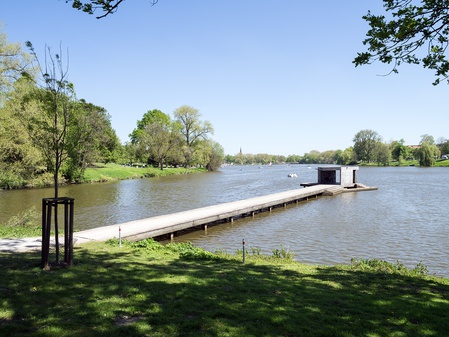
Toni Negri (2009) The Bijlmer Spinoza-Festival. Available at:
https://www.thomashirschhorn.com/the-bijlmer-spinoza-festival-2/ Accessed on: 12/07/2025
.
Max Cortesi (2022) East-West/West-East. Available at: https://www.atlasobscura.com/places/east-west-west-east Accessed on: 12/07/2025.
Jessica Fiala (2014) A Subtlety. Available at: https://www.instituteforpublicart.org/case-studies/a-subtlety/ Accessed on: 12/07/2025.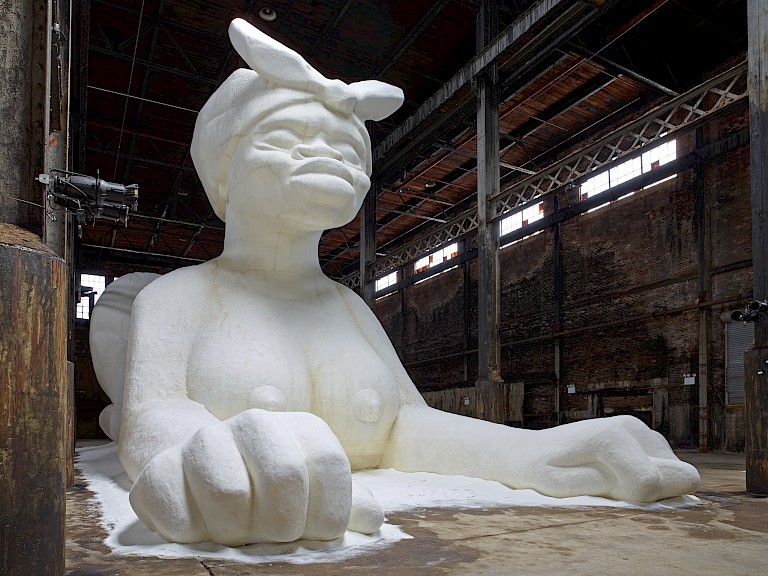
Bill Jacobsen (no date) 7000 Oaks. Available at: https://www.diaart.org/visit/visit-our-locations-sites/joseph-beuys-7000-oaks Accessed on: 12/07/2025.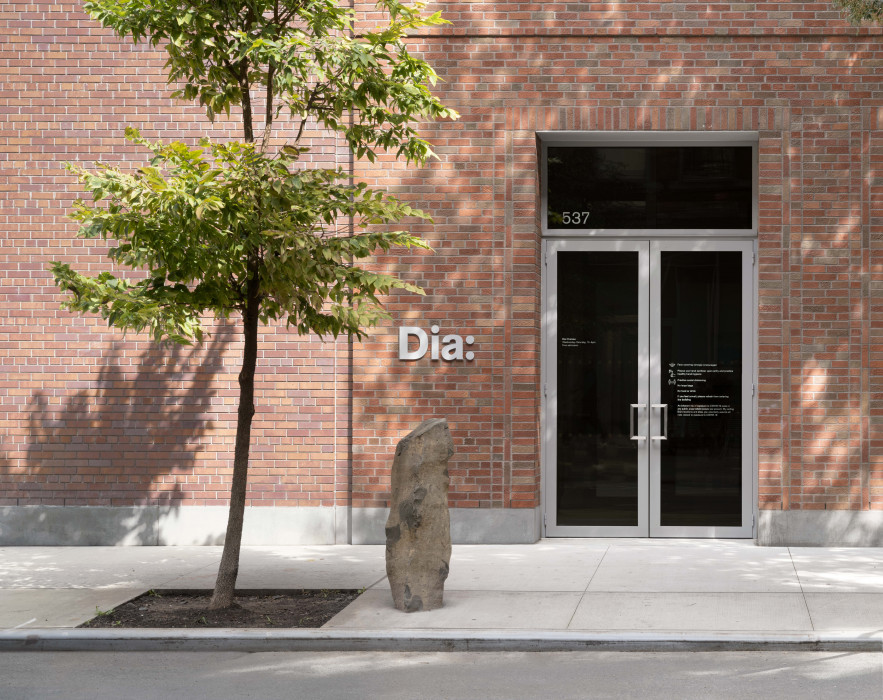
Alfie Bradley (2016) Knife Angel. Available at: https://www.alfiebradley.com/knife-angel-by-alfie-bradley/ Accessed on: 12/07/2025.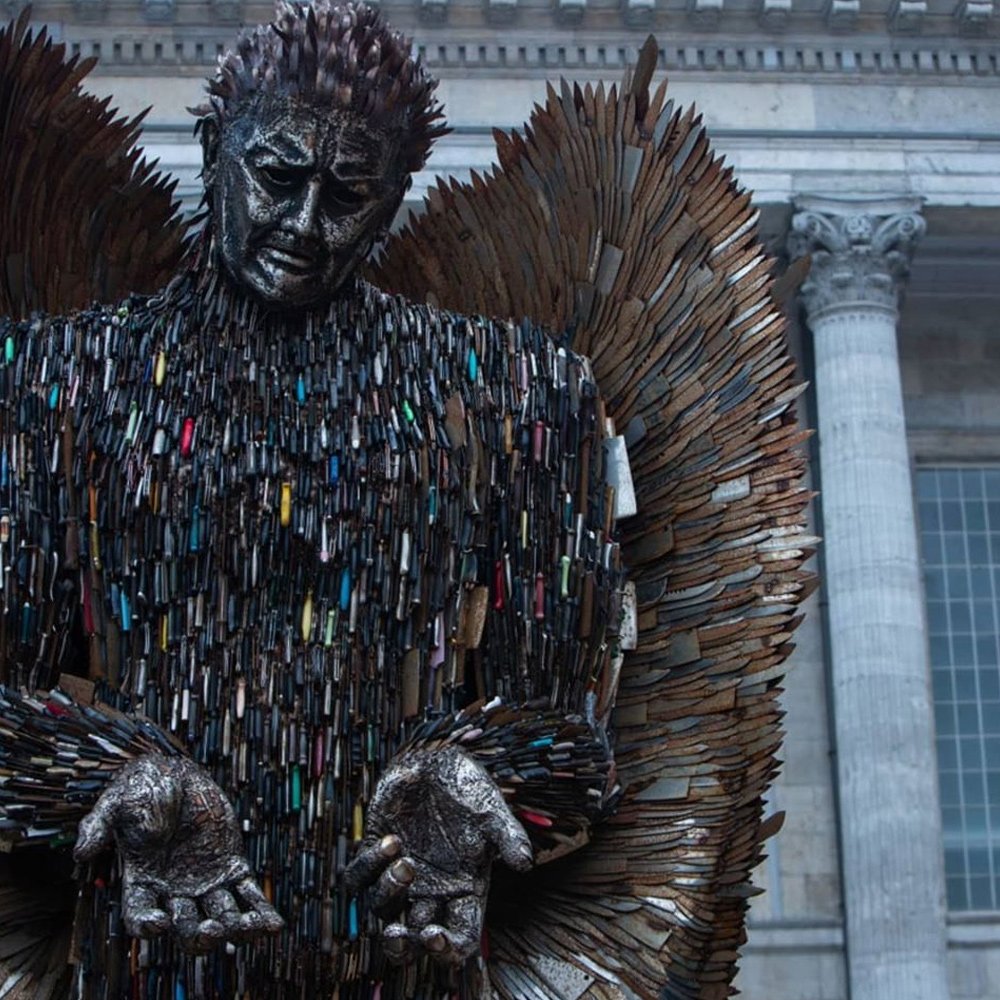
Postcard From Suffolk (2016) Pigs Gone Wild. Available at:
http://www.postcardfromsuffolk.com/highlights-pigs-gone-wild-2016/ Accessed on: 12/07/2025.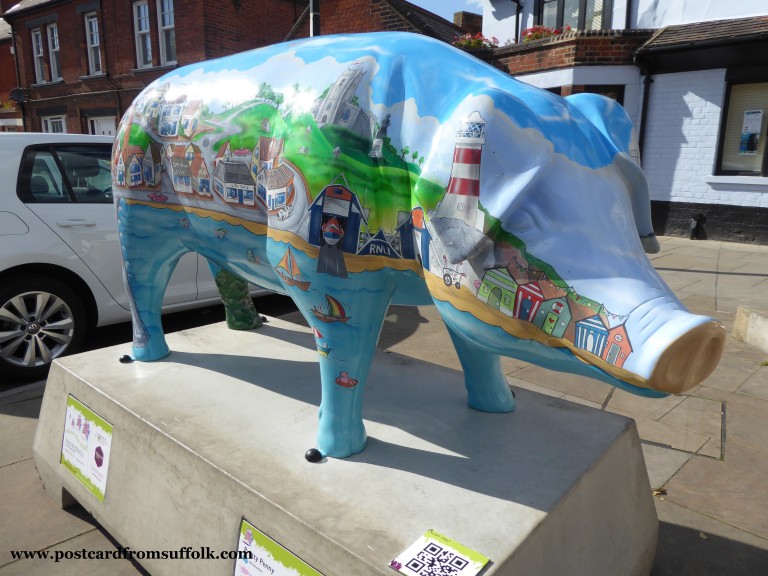
References
Ackroyd, H. and Harvey, D. (2021) Beuys’ Acorns. Available at: https://www.tate.org.uk/whats-on/tate-modern/beuys-acorns Accessed on: 28/03/2025.
Alfie Bradley Art (2017) The KNIFE ANGEL on “the one show”. Available at: https://www.youtube.com/watch?v=XjGYEjuFMR8 Accessed on: 01/04/2025.
Art Gallery (no date) The role of personal experience and emotions in interpreting abstract art. Available at: https://www.artgallery.co.uk/blog/17872-the-role-of-personal-experienceand-emotions-in-interpreting-abstractart#:~:text=When%20a%20viewer%20engages%20with,a%20space%20for%20personal%20r eflection Accessed on: 14/06/2025.
Art UK (2025) 7000 Oaks. Available at: https://artuk.org/discover/artworks/7000-oaks318809 Accessed on: 28/03/2025.
Art21 (2014) Preview: Thomas Hirschhorn in Season 7 of ART21 “Art in the Twenty-First Century”. Available at: https://youtu.be/bZDE52OYsGM?si=VpY8IKCe8FbPcxQf Accessed: 24/03/2025.
Art21 (2021) Kara Walker, A Subtlety, or the Marvelous Sugar Baby. Available at: https://magazine.art21.org/2014/05/23/the-making-of-kara-walkers-sugarsphinx/ Accessed on: 28/03/2025.
Balarine, C. (2024) ‘Art is purposely useless, hence why it’s more free than buildings’ – Richard Serra. Available at: https://www.cristinebalarineart.com/post/art-is-purposelyuseless-hence-why-it-s-more-free-than-buildings-richard-serra Accessed on: 22/03/2025.
BBC (2023) Knife Angel sculpture unveiled in Bradford. Available at: https://www.bbc.co.uk/news/uk-england-leeds65166416#:~:text=It%20features%20messages%20from%20families,the%20dangers%20of% 20knife%20crime.&text=Alfie%20Bradley%2C%20who%20created%20the,people%20to%20 take%20positive%20action.&text=It%20comes%20as%20West%20Yorkshire,life%20threate ning%20injuries%2C%20officers%20said. Accessed on: 01/04/2025.
BBC News (2016a) Real pig ‘goes wild’ in art trail town Ipswich. Available at: https://www.bbc.co.uk/news/uk-england-suffolk-37253672 Accessed on: 14/06/2025.
BBC News (2016b) Ed Sheeran pig statue sells for £6,200. Available at: http://bbc.co.uk/news/uk-england-suffolk-37443124 Accessed on: 14/06/2025.
Beech, D. (2009) Documents of contemporary art: Beauty. pp. 108-110 Whitechapel Gallery and MIT Press: London.
Bishop, C. in Thomas Hirschhorn (2011) Establishing a Critical Corpus. pp. 6-11 Swiss Federal Office of Culture: Bern.
Blumenthal, J. A. (2010) ‘Property law: A cognitive turn’ Psychonomic Bulletin & Review, 17(2), pp. 186–191 Available at: https://doi.org/10.3758/PBR.17.2.186 Accessed on: 24/03/2025.
Bolton Council (2023) Knife Angel Bolton. Available at: https://www.bolton.gov.uk/knifeangelbolton#:~:text=The%20purpose%20of%20the%20Ang el,through%20violent%20and%20thoughtless%20actions. Accessed on: 01/04/2025.
British Ironwork Centre (no date) Histing the Knife Angel – Frequently Asked Questions. Available at: https://www.britishironworkcentre.co.uk/knife-angel-frequently-askedquestions/ Accessed on: 01/04/2025.
Buck, L. (2021) To honour Joseph Beuys’s landmark urban forest installation, 100 oak trees have been planted outside Tate Modern. Available at: https://www.theartnewspaper.com/2021/05/04/to-honour-joseph-beuyss-landmark-urbanforest-installation-100-oak-trees-have-been-planted-outside-tate-modern Accessed on: 28/03/2025.
Chambers, S. (2022) Suffolk Show 2022 ‘smashed crowd records’, new figures reveal. Available at: https://www.eadt.co.uk/news/business/20683362.suffolk-show-2022smashed-crowd-records-new-figures-reveal/ Accessed on: 14/06/2025.
Creative Time (2014) Kara Walker. Available at: https://creativetime.org/projects/karawalker/ Accessed on: 28/03/2025.
Declan Henry (2024) The knife is the weapon: the person behind it is where it starts. Available at: https://declanhenry.co.uk/blog/articles/young-people-and-gangs/ Accessed on: 01/04/2025.
Department for Digital, Culture, Media and Sport (2019) Visits to museums and galleries. Available at: https://www.ethnicity-facts-figures.service.gov.uk/culture-andcommunity/culture-and-heritage/adults-visiting-museums-and-galleries/latest/ Accessed on: 22/03/2025.
Doha News Team (2020) Graffiti finally cleaned off iconic ‘East-West / West-East’ artwork. Available at: https://dohanews.co/graffiti-finally-cleaned-off-iconicartwork/#:~:text=The%20world%20famous%20East-West%20%2F%20WestEast%20art%20work,their%20names%2C%20messages%20and%20spraying%20graffiti%20o n%20them. Accessed on: 22/03/2025.
Environmental Art (2024) Joseph Beuys’ ambitious plan to plant 7000 oaks. Available at: https://publicdelivery.org/joseph-beuys-7000-oaks/ Accessed on: 28/03/2025.
Facebook (2016) Pigs Gone Wild’s Post. Available at: https://www.facebook.com/pigsgonewildsuffolk/posts/98-of-you-said-you-rated-youroverall-experience-of-pigs-gone-wild-as-excellent-/701313073363450/ Accessed on: 14/06/2025.
Fiala, J. (2014) A Subtlety. Available at: https://www.instituteforpublicart.org/casestudies/a-subtlety/ Accessed on: 28/03/2025.
Friedman, S. (no date) Thomas Hirschhorn Biography. Available at: https://www.stephenfriedman.com/artists/41-thomas-hirschhorn/biography/ Accessed on: 24/03/2025.
German National Tourist Board (no date) Kassel: a city of fairytales and works of art. Available at: https://www.germany.travel/en/cities-culture/kassel.html Accessed on: 28/03/2025.
Gingeras, A. (2016) “Quality, No! Energy, Yes!”: Thomas Hirschhorn on Why Confrontation Is Key When Making Art for the Public. Available at: https://www.artspace.com/magazine/art_101/book_report/phaidon-thomas-hirschhorninterview-54368 Accessed on: 22/03/2025.
Harcombe, C. and Bouverie, A. (2024) Edward Colston statue goes on permanent display in Bristol museum. Available at: https://www.bbc.co.uk/news/uk-england-bristol-68569148 Accessed on: 03/04/2025.
Haverhill (2024) The Knife Angle Info Booklet. Available at: https://haverhill-tc.gov.uk/wpcontent/uploads/The-Knife-Angle-Info-Booklet-8.pdf Accessed on: 01/04/2025.
Hirschhorn, T. (2009) The Bijlmer Spinoza-Festival. Available at: https://www.thomashirschhorn.com/the-bijlmer-spinoza-festival/ Accessed on: 22/03/2025.
Hnin, T. (2022) The Synergy of Art and Architecture: Where Creativity & Design Unite. Available at: https://www.novatr.com/blog/art-and- architecture#:~:text=The%20main%20difference%20between%20Art,planning%2C%20desig ning%2C%20and%20construction. Accessed on: 22/03/2025.
Ian Visits (2021) The sad sight of Beuys’ Acorns outside the Tate Modern. Available at: https://www.ianvisits.co.uk/articles/the-sad-sight-of-beuys-acorns-outside-the-tatemodern-43191/ Accessed on: 28/03/2025.
Ijeoma, F. (2024) Escapism through art. Available at: https://thefavourijeoma.medium.com/escapism-through-art-f2af4c064d49 Accessed on: 22/03/2025.
Irish, A. (2014) Kara Walker’s Fantastical “A Subtlety”. Available at: https://www.artforprogress.org/kara-walkers-fantastical-a-subtlety-2/ Accessed on: 28/03/2025.
Jacobs, B. (2021) Why planting a tree is a radical act. Available at: https://www.bbc.co.uk/culture/article/20210618-joseph-beuys-the-original-eco-activist Accessed on: 28/03/2025.
Kahn, N. and Graham, R. (2019) Promoting Positive Adolescent Health Behaviors and Outcomes: Thriving in the 21st Century. Available at: https://www.ncbi.nlm.nih.gov/books/NBK554988/ Accessed on: 22/03/2025.
Kara Walker Studio (no date) Biography. Available at: https://www.karawalkerstudio.com/biography Accessed on: 28/03/2025.
Keenan, A. (2024) The Broad will reimagine a famed Joseph Beuys reforestation project. Available at: https://www.theartnewspaper.com/2024/07/11/the-broad-will-reimagine-afamed-joseph-beuys-reforestation-project Accessed on: 28/03/2025.
Knife Angel Lancashire (2021) Knife Angel Makes Huge Impact on Lancashire Communities. Available at: https://lancsvrn.co.uk/latest-news/knife-angel-makes-huge-impact-onlancashire-communities/ Accessed on: 01/04/2025.
Knife Angel Luton (2024) The Knife Angel Sculpture: A Beacon of Reflection and Change in Luton. Available at: https://knifeangelluton.com/ Accessed on: 01/04/2025.
Kwon, M. (2004) One place After Another: Site-specific Art and Locational Identity. pp. 141 MIT Press: Massachusetts.
Le Feuvre, L. (2010) Failure. pp. 116-117 Whitechapel Gallery and MIT Press: London.
Lee, S. (2025) Decoding Urban Culture. Available at: https://www.numberanalytics.com/blog/decoding-urbanculture#:~:text=environments.%22%20%2D%201,Characteristics%20of%20Urban%20Culture,%2C%20dance%2C%20and%20visual%20arts. Accessed on: 14/06/2025.
Loichot, V. (2014) Kara Walker’s Blood Sugar: A Subtlety or the Marvelous Sugar Baby. Available at: https://southernspaces.org/2014/kara-walkers-blood-sugar-subtlety-ormarvelous-sugar-baby/ Accessed on: 28/03/2025.
Longreads (2018) Kara Walker’s Subtlety. Available at: https://longreads.com/2018/02/27/kara-walkers-subtlety/ Accessed on: 28/03/2025.
Mitchell, G. (2016) Find out where the Pigs Gone Wild sculptures are now. Available at: https://www.eadt.co.uk/news/21375068.find-pigs-gone-wild-sculptures-now/ Accessed on: 14/06/2025.
National Galleries Scotland (no date) Joseph Beuys Learning Resource. Available at: https://www.nationalgalleries.org/art-and-artists/features/joseph-beuys-learning-resource Accessed on: 28/03/2025.
NRW Tourism (no date) Jorge Pardo Pier. Available at: https://www.nrw-tourism.com/jorgepardo-pier Accessed on: 22/03/2025.
Office for National Statistics (2021) How life has changed in Ipswich: Census 2021. Available at: https://www.ons.gov.uk/visualisations/censusareachanges/E07000202/ Accessed on: 14/06/2025.
Parker, B. (2021) When Architecture Becomes Art – Buildings That Inspire Me. Available at: https://www.brianparkerartist.co.uk/when-architecture-becomesart/#:~:text=It%27s%20a%20good%20question.,materials%20over%20design%20or%20scul pture. Accessed on: 22/03/2025.
Petra Schönhöfer (2021) Shaping Society Like a Sculpture. Available at: https://www.goethe.de/ins/gb/en/kul/mag/22209348.html Accessed on: 01/04/2025.
Postcard from Suffolk (2016) My Highlights of Pigs Gone Wild 2016. Available at: http://www.postcardfromsuffolk.com/highlights-pigs-gone-wild-2016/ Accessed on: 14/06/2025.
Poundfield (2016) Pigs Gone Wild – Suffolk 2016. Available at: https://poundfield.com/2016/06/15/pigs-gone-wild/ Accessed on: 14/06/2025.
Raiford, L. and Hayes, R. (2014) Remembering the Workers of the Domino Sugar Factory. Available at: https://www.theatlantic.com/business/archive/2014/07/remembering-theworkers-of-the-domino-sugar-factory/373930/ Accessed on: 28/03/2025.
Raupach, S. (2017) Jorge Pardo, Pier, 1997, 51°57’10.9″N 7°36’26.2″E. Available at: https://www.kunsthallemuenster.de/en/collection/jorge-pardo-pier-1997-5157109n736262e/ Accessed on: 22/03/2025.
Relyea, L. (2016) On the Many Benefits of Being a Difficult Artist: A Q&A With Jorge Pardo. Available at: https://www.artspace.com/magazine/interviews_features/book_report/jorgepardo-lane-relyea-interview-54214 Accessed on: 22/03/2025.
Rindfuss, B. (2022) Jorge Pardo’s Fanciful Folly Exhibition Illuminates Houston. Available at: https://www.wmagazine.com/culture/artist-jorge-pardo-folly-exhibition-houston-interview Accessed on: 22/03/2025.
Ryan, G, in Beerkens, L. and Learner, T. (2013) Conserving Outdoor Painted Sculpture. pp. 512 Available at: https://www.getty.edu/conservation/publications_resources/pdf_publications/pdf/conserv _outdoor_painted.pdf Accessed on: 22/03/2025.
Sandalls, K. (2017) Bacon memories; looking back at the Pigs Gone Wild trail. Available at: http://eadt.co.uk/news/21364490.bacon-memories-looking-back-pigs-gone-wild-trail/ Accessed on: 14/06/2025.
Sandwell (2024) Knife Angel. Available at: https://www.sandwell.gov.uk/knifeangel#:~:text=Why%20the%20Knife%20Angel%20Matte rs,taking%20meaningful%20action%20against%20it. Accessed on: 01/04/2025.
Sculpture Project Archive (no date) Jorge Pardo. Available at: https://www.skulpturprojekte-archiv.de/en-us/1997/projects/24/ Accessed on: 22/03/2025.
Sirlin, D. (2014) Kara E. Walker at the Sugar Factory. Available at: https://www.theartsection.com/a-subtlety Accessed on: 28/03/2025.
Sitz, M. (2015) East-West/West-East by Richard Serra. Available at: https://www.architecturalrecord.com/articles/10097-east-westwest-east-by-richard-serra Accessed on: 22/03/2025.
Something Curated (2019) Sculpture As Social Practice. Available at: https://somethingcurated.com/2019/10/30/sculpture-as-social-practice/ Accessed on: 28/03/2025.
South London Gallery (2015) Thomas Hirschhorn – Artist Interview. Available at: https://youtu.be/s5Qw2plE_ZQ?si=EraeFE8hKMGXqVaI Accessed on: 24/03/2025.
South Yorkshire Violence Reduction Unit (2022) Knife Angel survey – results. Available at: https://southyorkshireviolencereductionunit.com/news/knife-angel-survey-results/ Accessed on: 03/04/2025.
Soysa, S. (2022) Cambridge Sculpture Trails. Available at: https://www.limelight-artstravel.com.au/destination-insights/cambridge-sculpture-trails Accessed on: 14/06/2025.
St Elizabeth Hospice (2015) The Pigs Are Coming to Ipswich. Available at: https://www.stelizabethhospice.org.uk/news/the-pigs-are-coming-to-ipswich/ Accessed on: 14/06/2025.
St Elizabeth Hospice (2017) Charity behind Pigs Gone Wild announces another art trail will be coming to the town. Available at: https://www.stelizabethhospice.org.uk/news/charitybehind-pigs-gone-wild-announces-another-art-trail-will-be-coming-to-the-town/ Accessed on: 14/06/2025.
Sunderland (no date) Potentially life-saving bleed kit installed in Roker. Available at: https://www.sunderland.gov.uk/article/33534/Potentially-life-saving-bleed-kit-installed-inRoker Accessed on: 01/04/2025.
Tate (no date a) Sculpture. Available at: https://www.tate.org.uk/art/art-terms/s/sculpture Accessed on: 14/06/2025.
Tate (no date b) 7000 Oak Trees. Available at: https://www.tate.org.uk/art/artworks/beuys7000-oak-trees-ar00745 Accessed on: 28/03/2025.
Thompson, J. and Day, J. (2020) ‘Understanding the impact and value of temporary public art sculpture trails’ Local Economy: The Journal of the Local Economy Policy Unit. 35(3) doi: 10.1177/0269094220921811.
Wang, Y. (2022) The Interaction between Public Environmental Art Sculpture and Environment Based on the Analysis of Spatial Environment Characteristics. Available at: https://onlinelibrary.wiley.com/doi/10.1155/2022/5168975 Accessed on: 22/03/2025.
Wendling, C. (2015) Joseph Beuys Lives! 7000 Oaks Project to Go Ahead in Scotland. Available at: https://artlyst.com/news/joseph-beuys-lives-7000-oaks-project-to-go-aheadin-scotland/ Accessed on: 28/03/2025.
William E. Gladstone (no date) William E. Gladstone Quotes. Available at: https://www.brainyquote.com/quotes/william_e_gladstone_150990, Accessed 24/03/2025.
Wirth, H. (2024) Uncovering the Biological Effects of Basalt Application in Vegetable Crops. Available at: https://healthinstitute.illinois.edu/partnerships-translation/communityacademic-partnerships/community-academic-scholars/projects/uncovering-the-biologicaleffects-of-basalt-application-in-vegetablecrops#:~:text=Recent%20research%20has%20suggested%20that,to%20mitigate%20the%20 climate%20crisis Accessed on: 28/03/2025.
Wybone (2024) Knife Amnesty Bin to tour the UK with the Knife Angel Statue. Available at: https://wybone.co.uk/knife-amnesty-bin-to-tour-the-uk-with-the-knife-angel-statue/ Accessed on: 01/04/2025.